What if you could see yourself 25 years from now? Thanks to artificial intelligence, this is no longer just imagination. AI-powered tools can analyze your photo and show a realistic version of your future face — wrinkles, gray hair, and all. It's a fascinating mix of technology, science, and curiosity that makes time visible in seconds.

People use these tools for fun, self-reflection, or even health awareness. But behind those quick transformations lies powerful technology built on years of research. This article explores how AI predicts your future look, why people love using it, and how it might change the way we think about aging and identity.
1. How AI Turns Photos into the Future You
The basic idea is simple: AI learns how people age by studying millions of real faces. It looks for patterns — how skin texture changes, how features soften, and how expressions evolve with time. Once trained, the system applies those same aging effects to your photo.
Unlike filters or drawings, AI doesn't guess randomly. It uses algorithms that understand your bone structure, face shape, and lighting. Every prediction is built from real data. That's why many results look surprisingly natural — like a version of you that could actually exist.
Some AI models also adjust hair color, skin tone, and even posture. They aim to make the final image feel as realistic as possible, not exaggerated. In the end, you get a photo that feels both familiar and foreign — a digital mirror that reflects time.
2. Why People Are Obsessed with Seeing Their Future Face
There's something powerful about seeing yourself age. For some, it's pure curiosity. For others, it's emotional — a way to connect with the future, or even imagine how loved ones might look decades later.
AI aging tools became popular because they turn abstract ideas into visual experiences. They make time — something we can't see — visible and personal. It's not just entertainment; it's a reminder of life's continuity.
Many people also use these tools to reflect on lifestyle habits. Seeing how smoking, sun exposure, or stress might affect your skin can be eye-opening. What used to be a number on a health chart now has a face — yours.
3. The Technology Behind the Transformation
At the core of every AI aging tool is machine learning. Developers feed the AI millions of images of people at different ages. Over time, the model learns the patterns of how faces change.
The most advanced systems use neural networks and GANs — short for Generative Adversarial Networks. One AI creates an older version of your face, while another checks if it looks real. This "friendly competition" helps the results become more accurate with each attempt.
Modern AI also learns from environmental data. For example, algorithms might consider global aging trends, lifestyle differences, or climate effects on skin. This adds depth to the prediction, making it more than just a visual filter — it becomes a scientific estimate.
4. Privacy and Ethical Questions
As with any AI that uses personal data, privacy is a real concern. Uploading your face means sharing biometric information — data that's unique to you. If a company doesn't clearly explain how your photos are stored or used, that's a red flag.
Experts recommend reading privacy policies before trying any app. Some tools delete your image after processing; others might keep it for research or training purposes. Always choose platforms that value transparency.
There's also the issue of bias. If an AI is trained mostly on certain skin tones or facial types, its predictions may not represent everyone accurately. Developers are now working to make datasets more diverse to reduce these gaps.
Lastly, there's the risk of misuse. The same technology that can predict aging could also be used to create fake or misleading images. Responsible innovation and strong regulation are key to preventing harm.
5. The Emotional Side of Seeing the Future
Beyond the tech, AI aging has a deeply human side. Seeing your older self can bring out different emotions — surprise, nostalgia, or even motivation. It's not just about curiosity; it's about self-awareness.
Some users describe it as "time travel without leaving home." For others, it's a reminder of family, aging parents, or the passage of time. It can even inspire gratitude — realizing that aging, though inevitable, is also proof of life and experience.
AI aging doesn't only predict faces; it invites reflection. It makes you think about how you treat your body, your choices, and what matters most in the years ahead.
6. What the Future Holds for AI Aging
As technology evolves, aging simulations will become even more advanced and interactive.
-
3D aging avatars: Future tools may generate moving 3D models that age in real time, showing expressions and motion.
-
Smart mirrors: Imagine looking in a mirror that projects your older face with accurate skin and voice adjustments.
-
Personalized health models: By linking data from fitness trackers and health apps, AI could predict how your specific habits affect your appearance.
-
Family aging previews: Future tools might show how family members — parents, children, or couples — could look in 2050, blending genetics with AI modeling.
In short, the next step for AI aging is realism and personalization. It will go beyond curiosity to become a part of health, wellness, and storytelling.
Conclusion
AI aging tools combine science and imagination in a way that feels both futuristic and familiar. They let us look ahead, reflect on our choices, and see the beauty in time passing.
The technology isn't perfect, and it raises important questions about privacy and ethics. But it also opens new ways to learn about ourselves and connect across generations.
By 2050, AI aging might not just show you an older photo — it might help you plan for a healthier, happier future. Until then, every image reminds us that aging isn't something to fear. It's a story of change, and AI simply helps us see the next chapter before it begins.
 Top 24 Artificial Intelligence Applications and Uses
- Top 6 AI Tools for 2025 (Free AI assistants you can't miss)
- Study Smarter, Not Harder: How Students Can Use AI Tools to Learn 2X Faster
- Seeing the Future: AI Face Generators and the Next 10 Years
- The Complete Guide to Using AI-Powered Virtual Assistants Effectively


- Everything Else
Top 24 Artificial Intelligence Applications and UsesArtificial Intelligence (AI) has evolved from an experimental concept into a foundational force across nearly every industry. In this guide, we'll explore how AI is transforming six key industries: E-Commerce, Healthcare, Marketing, Generative AI, Entertainment, and Education.- Everything Else
Top 6 AI Tools for 2025 (Free AI assistants you can't miss)In 2025, artificial intelligence has fully transitioned from buzzword to bedrock. Whether you're coding, writing, managing teams, analyzing data, or just trying to keep up with the flood of daily information, there's an AI assistant designed to make you faster, smarter, and more effective.- Everything Else
Study Smarter, Not Harder: How Students Can Use AI Tools to Learn 2X FasterAI is transforming the way students learn, helping them master subjects faster, write better, and retain more—without spending twice the time. Here’s how to use the right tools to supercharge your studies.- Everything Else
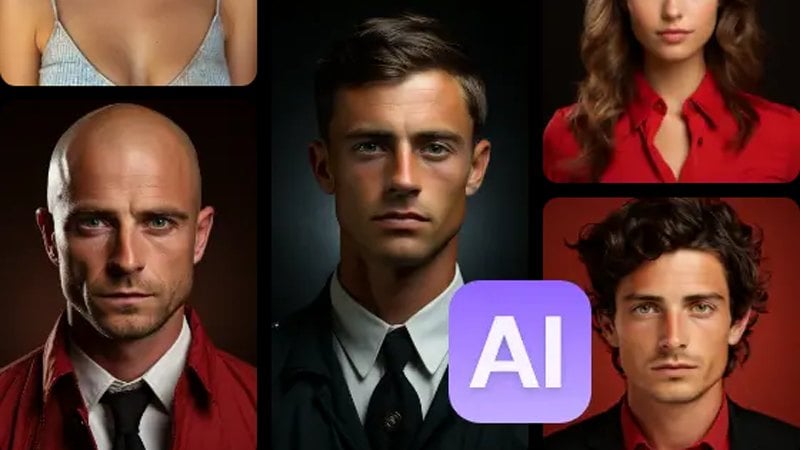
Seeing the Future: AI Face Generators and the Next 10 YearsIn the next decade, artificial intelligence (AI) will evolve dramatically in facial generation, emotional interaction, and social integration. AI will “grow a face,” express emotions, and deeply integrate into human life—reshaping technology, ethics, and commerce all at once.- Everything Else
The Complete Guide to Using AI-Powered Virtual Assistants EffectivelyAI virtual assistants are rapidly transforming the way we manage daily tasks and workflows. Whether you're a business owner, working professional, or tech-savvy individual, learning how to use AI assistants effectively can save time, reduce errors, and boost productivity. In this guide, you'll discover practical strategies to get the most out of your AI assistant.
- Unsold Electric Cars For Seniors Now Almost Given Away: View Prices
- Looking For Free Dental Implants? Check Out These Top Programs For Seniors
- Discover Affordable Senior Apartments Near You
- Empower Yourself With These HIV Treatment Choices
- Do You Know These Signs of Atopic Dermatitis
- How to Choose Reliable Dating Apps for Meaningful Connections